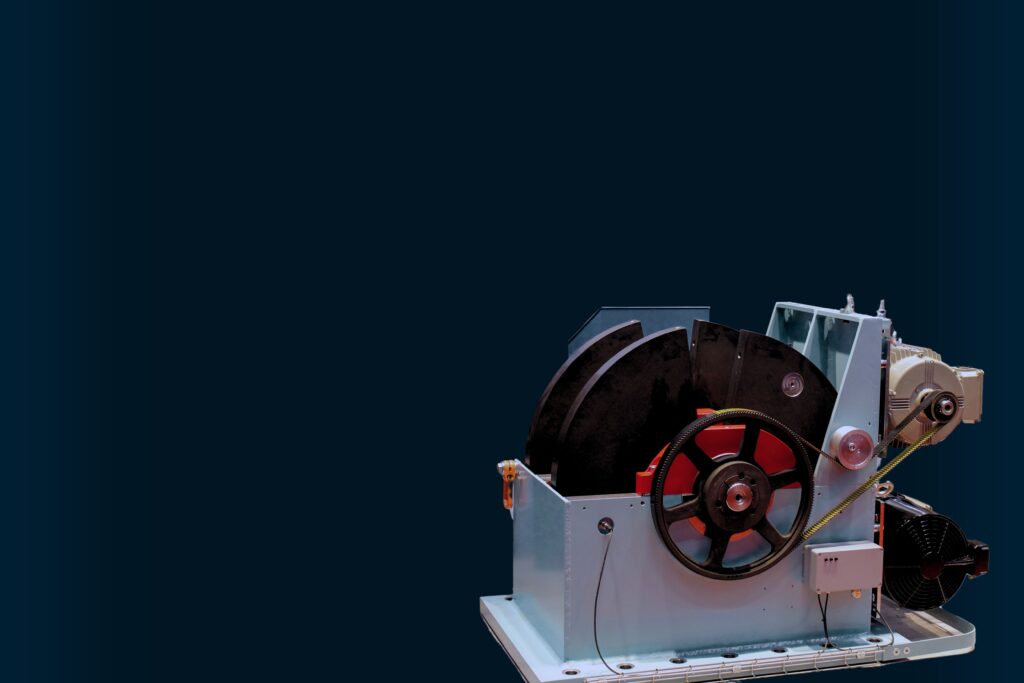
Built for tomorrow’s engines: the story behind the next-generation compensator
Two-stroke engines are becoming more efficient – and that means larger forces at lower speeds. At SMM 2026 in Hamburg, G&O Maritime launched a new generation of compensators built to meet that shift. Here, we examine what drove the development, what has changed, and why a new test facility was key.

About the expert
Sebastriam Sandahl Søndergaard is a Research and Development Engineer with a Master’s degree in Design of Mechanical Systems from Aalborg University. He plays a key role in the development of the latest compansator solution, the C-125M4, applying his expertise in mechanical design, innovation, and product development to help bring advanced engineering solutions from concept to reality.
Shipowners and engine designers are pursuing greater fuel efficiency through improvements to both engines and propellers. Larger, slower-turning propellers can improve propulsive efficiency, while long-stroke engine designs can improve thermal efficiency, together reducing fuel consumption per nautical mile. But they also increase the excitation forces a vibration compensator must counteract.
“Where the market used to specify a size 65 compensator, it moved up to a 90. Now we are at the point where customers are asking for something larger than a 90,” says Sebastian Sandahl Søndergaard, R&D Engineer at G&O Maritime.
That shift is the background for the company’s recent launch of a new generation of compensators, and an entirely new way of testing them.
Drawing the red line
The demand was there before development began, as customers came forward with new main engines requiring more balancing than the existing range could offer. In early 2026, the team mapped every G&O compensator against engines from the leading engine designers, including the new ones coming to market.
“We drew a red line across the plot: these are the engines we want to cover. That became our target,” says Sebastian Sandahl Søndergaard. Less than a year later, the result was ready for launch at SMM.
Stronger, more compact, easier to service
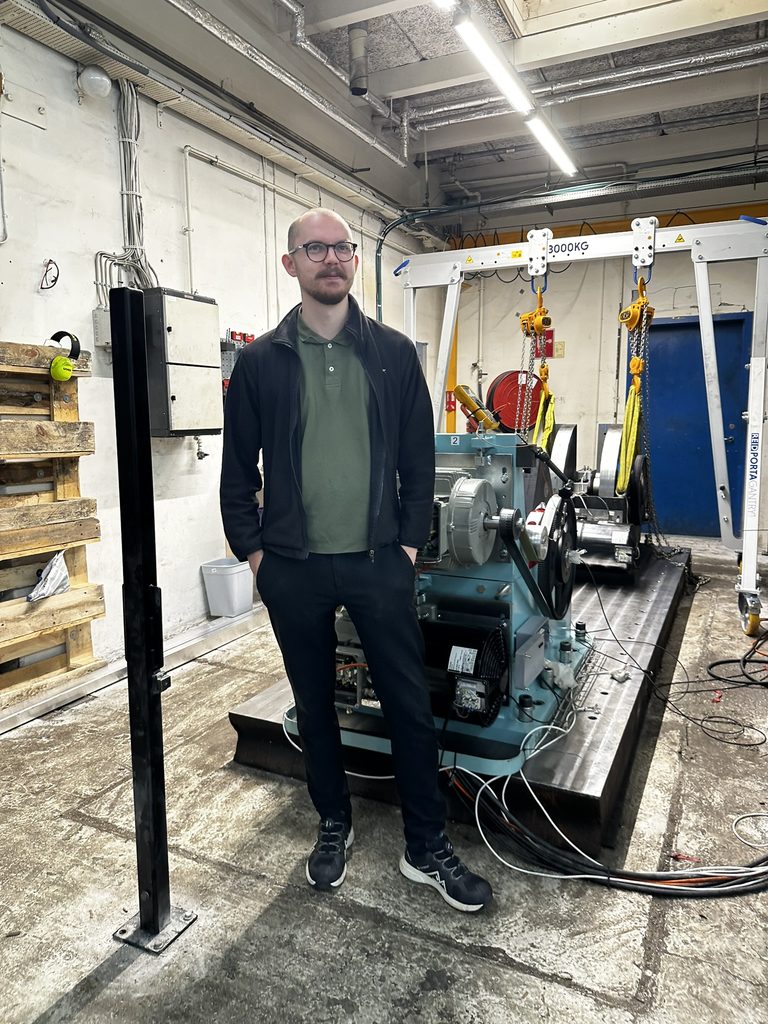
The bearings have been upgraded to handle the larger forces, in close cooperation with the supplier. The new platform also allows the direction of force to be adjusted, opening the door to horizontal as well as vertical configurations.
The drive motors now sit on the same side instead of one on each side. Compensators are installed in a confined space next to the cylinders and scavenge air receiver, where width is limited.
“There is usually room in the height, but not in the width. With both motors on one side, we can push the compensator closer to the engine,” says Sebastian Sandahl Søndergaard. A more service-friendly way of tightening the tooth belts came as a welcome side effect.
A test bench closer to real-life conditions
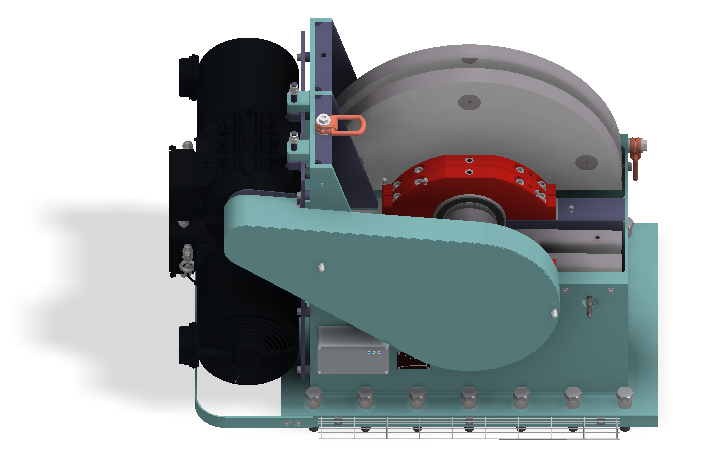
The biggest challenge was proving that the compensator works. If a compensator ran at full force on an ordinary test stand, it would make the entire building shake. G&O therefore built a new test facility where two compensators are set up against each other. One simulates a main engine on a ship, while the other is the unit being tested.
“We can now test our compensators in conditions as close to real life as possible and replace assumptions with a clear picture of what works and where we need to adjust. That will benefit the development of future products, too,” Sebastian Sandahl Søndergaard says.
Less risk for yards and designers
Compensators are specified in newbuilds by the shipyard or engine designer, or installed as retrofits. For yards and designers, Sebastian Sandahl Søndergaard sees them as a way to reduce risk. A vessel, after all, contains countless subsystems, each with a resonance that may coincide with the engine’s excitation.
“Rather than analysing every single subsystem, you can invest in a compensator that reduces the excitation at the source, all the time. It is a much simpler way to remove the risk,” he says.
From specification to finished product
The project began with a joint definition of what to develop and what success would look like. Design then became a close collaboration between Sebastian Sandahl Søndergaard and Vibration Compensator Specialist Stefan Neumeyer, PhD, with input from production, service, and external suppliers.
“We maintained a close dialogue with the people tasked with building and installing the compensator about potential issues or improvements. And if they or a partner identified something that could be done better, we incorporated it while redesigning anyway,” says Sebastian Sandahl Søndergaard.
The result, launched at SMM 2026, is a compensator built for the next generation of two-stroke engines – and a stronger platform for what comes next.